Hi Vis Clothing Guide: Stay Safe and Seen on Site
If you have just been handed the job of sorting workwear for your team, hi vis can feel like a maze of numbers, colours and acronyms. Do you need a waistcoat or a jacket? What does the number after “EN ISO” actually mean? And how do you buy the right thing without ordering 200 pieces you will never use?
This guide cuts through it. We will cover what hi vis clothing is, why the standards matter, the main garment types and how to choose the right gear for your crew – in plain English, with no jargon.
What is hi vis clothing, and why does it matter?
Hi vis, or high visibility, clothing is workwear designed to make the wearer stand out against their surroundings. It does that with two things: fluorescent fabric that stays bright in daylight, and retroreflective tape that bounces light back to the source, so you show up in headlights, floodlights and low light.
That matters because being seen is a safety measure, not a fashion choice. On a road, a loading bay or a busy site, a driver or machine operator only has a split second to spot a person. Hi vis buys them that time. In many industries it is also a legal requirement – if a risk assessment says visibility is a hazard, hi vis is part of the control.
It is worth knowing that hi vis clothing is graded, not one-size-fits-all. The European standard EN ISO 20471 sorts garments into three classes based on how much fluorescent and reflective material they use. Class 1 is the least coverage (think a simple waistcoat), while Class 3 gives the most visible area, usually from long sleeves and a jacket or coverall combination. The higher the class, the more visible you are – and the more exposed the environment, the more coverage you will usually want.
The main hi vis garment types and when to wear each one
Most hi vis ranges are built around a handful of garments. Here is what each one is for.
Hi vis waistcoats
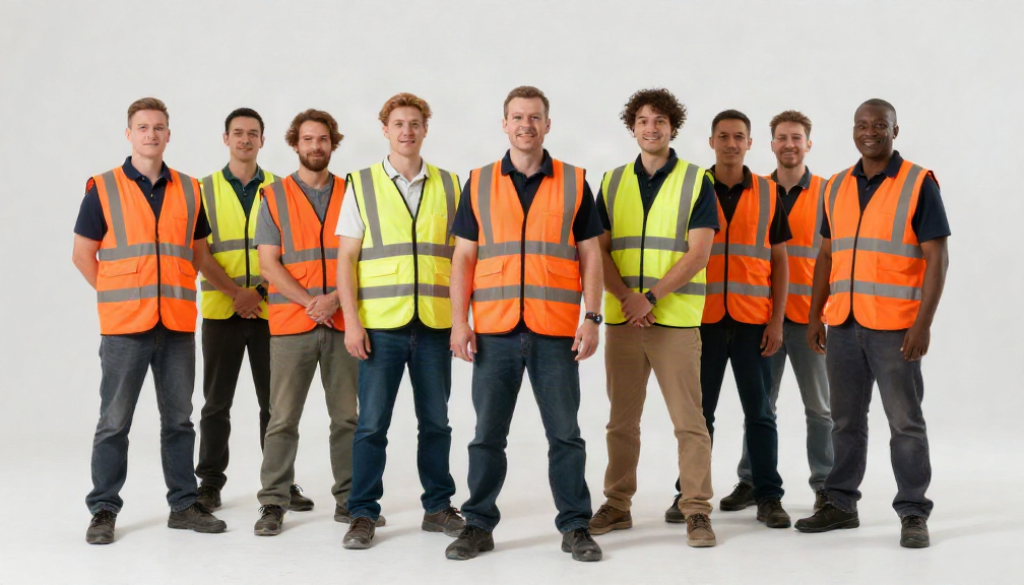
The classic, and the cheapest way to get compliant. A hi vis waistcoat slips over whatever you are already wearing, so it is ideal for visitors, short stints on site, and roles where you need visibility without extra warmth. Great for delivery drivers, site visitors and office staff doing a walk-round.
Hi vis polo shirts and t-shirts
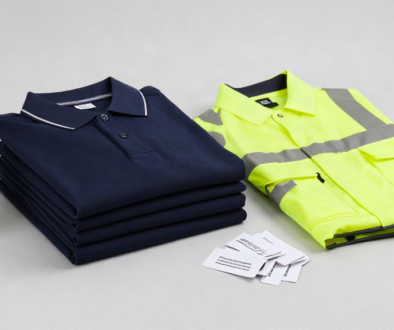
If you want visibility and a smarter look, hi vis polos and t-shirts are the workhorses. They keep your team seen through the working day and take branding beautifully, so your logo sits on the garment rather than on a vest thrown over the top. Perfect for summer, indoor-to-outdoor roles and customer-facing teams.
Hi vis sweatshirts, fleeces and bodywarmers
When the temperature drops but you still need to be seen, layer up with hi vis sweatshirts, fleeces or bodywarmers. These are the go-to for autumn and winter, early-morning starts and cold warehouses. They add warmth and light protection without the bulk of a full coat.
Hi vis trousers, coats and coveralls
For the toughest conditions, you are looking at hi vis trousers, coats and coveralls. These give the highest coverage and often combine waterproof, windproof or thermal fabrics with reflective detailing. Choose these for road crews, night work and outdoor sites in bad weather, where both warmth and maximum visibility matter.
Simple steps to kit your team out with the right hi vis gear
You do not need to be a health and safety expert to get this right. Work through it in order.
First, check your risk assessment. It will tell you what hazards your team faces and whether hi vis is required, and it usually points to the minimum class you need. If you are unsure, ask your safety advisor.
Second, match the class to the job and the lighting. Higher-traffic, higher-speed or darker environments need more coverage, which usually means moving up a class.
Third, pick the garment to suit the weather and the task. A waistcoat for a quick visit, a polo for warm days, a fleece or softshell for the cold, and a full hi vis coat or coverall for the worst of it.
Fourth, get the sizes right and order a mix rather than a single run. People wear hi vis every day, so comfort matters as much as compliance – an uncomfortable garment gets left in the van.
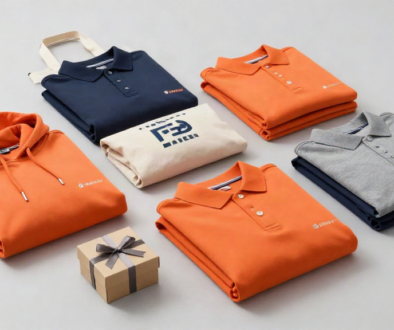
Finally, think about branding. If your team is customer-facing, embroidered or printed logos on the garment itself look far more professional than a plain vest over a branded top.
Branding your hi vis without the usual headaches
Here is where a lot of suppliers trip small businesses up. Traditional workwear suppliers often demand minimum order quantities and charge setup fees just to digitise your logo, which is painful if you only need six or eight garments.
At Salutem Workwear we do it differently. There is no minimum order and no setup fees, so you can order exactly what you need – whether that is one polo for a new starter or a full kit for a growing team. We handle both embroidery and printing, and we turn orders around quickly, because we know a new starter needs to be kitted out before their first shift, not three weeks after it.
Common hi vis mistakes to avoid
The biggest one is buying on price alone and ending up with a garment that is too low a class for the job, or one that frays and fades within a few washes – because once the fluorescent colour dulls and the tape peels, the garment is no longer doing its job. Keep spare garments for visitors, and replace anything that is dirty, damaged or faded.
The bottom line
Hi vis clothing is simpler than it looks. Match the class to the risk, match the garment to the weather and the task, and get it branded properly so your team looks as professional as they are safe. If you would rather talk it through than guess, we are always happy to help you pick the right kit – no minimum order, no pressure, just straight advice from people who kit out real teams every day.