Embroidered vs Printed Workwear Logos: Which to Choose?
So you’ve decided to kit your team out with branded workwear. The garments are chosen, the sizes are in, and there’s just one decision left: how do you want your logo on there? For most businesses that means a straight choice between embroidery and printing – and it’s the question we get asked more than any other at Salutem Workwear.
It’s a fair thing to be stuck on. Both methods put your name on a shirt, but they behave very differently on a garment, in the wash, and on your budget. Here’s a plain-English comparison so you can pick the right finish the first time.
What’s the actual difference?
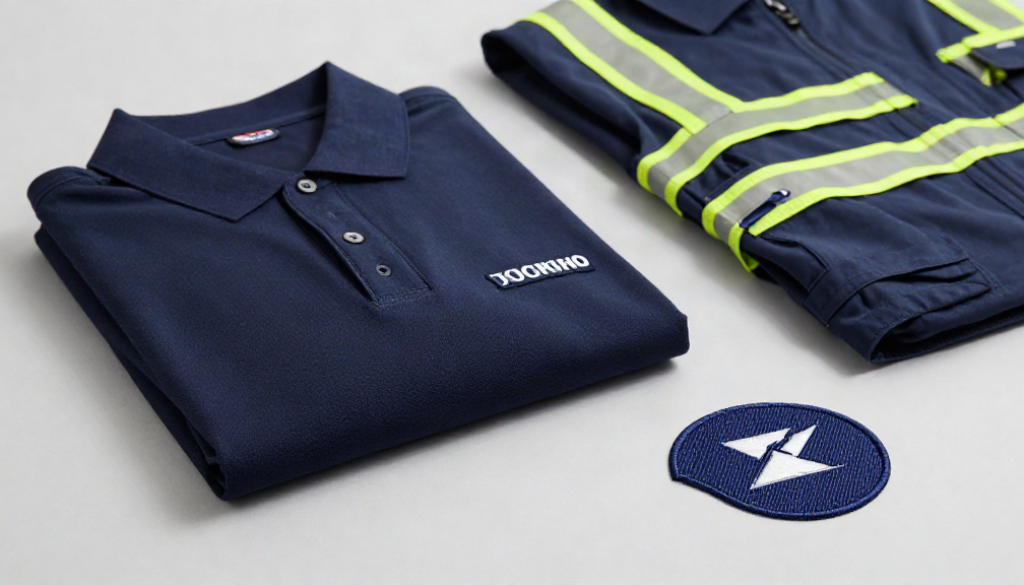
Embroidery stitches your logo directly into the fabric using coloured thread. It produces a raised, textured finish that’s sewn in rather than applied on top. It’s the classic look you see on polo shirts, fleeces and company jackets.
Printing transfers your design onto the surface of the garment, usually with heat-applied vinyl or a DTF (direct-to-film) transfer. It can reproduce far more detail and colour – gradients, thin lines, full-colour artwork – because the design is printed rather than stitched.
How each one looks and feels
Embroidery has a premium, professional feel. The stitching gives the logo depth, it catches the light slightly, and it reads as high quality on the sort of garments your team wears every day. It also works beautifully with simple logos: text, initials, a single-colour mark.
Printing gives you freedom. If your logo has lots of detail, fine lettering, multiple colours or a photographic element, print handles it without the compromises embroidery has to make. The trade-off is that a print sits on the fabric as a layer, so on very stretchy or textured garments it can feel a little flatter than stitching.
Durability: which lasts longer?
This is where the two methods really part company.
Embroidery is the tougher of the two. Those stitches are part of the garment, so they don’t crack, peel or fade with washing and everyday wear. On workwear that’s getting hammered – site jackets, hi-vis, warehouse polos – embroidery just keeps going, which is exactly why it’s the standard for heavy-use uniforms.
Printing is durable when it’s done properly, but it lives on the surface, so it demands a bit more care. Avoid washing printed garments too hot, don’t tumble dry them on high, and never iron directly over the print. Looked after correctly, a good DTF print lasts well – but on a garment that’s going through industrial washing, embroidery will outlast it.
Cost and turnaround
Cost depends on your logo more than the method. As a rule, embroidery pricing is driven by stitch count – a small left-chest logo is inexpensive, a large multi-colour back design costs more because there are more stitches.
Printing pricing is driven by size and colour count, and it tends to be the more affordable option for large, detailed, multi-colour designs – the kind of artwork that would be painfully expensive to stitch.
Turnaround matters too when you’re kitting out a team. Always ask your supplier what their lead time looks like for your specific design, because a big stitch-count logo or a complex print order will take longer than a simple one.
Which garment suits which method?
The garment fabric is often the deciding factor:
-
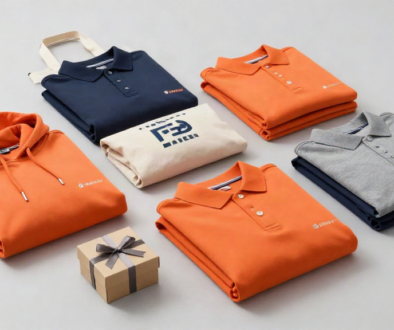
Polo shirts, sweatshirts, fleeces, softshell jackets and caps: embroidery is the natural fit. The fabric takes stitches well and the raised logo looks the part on these wardrobe staples.
-
T-shirts and lightweight tops: printing is usually the better pick. The fabric is thinner, so a printed logo keeps the shirt feeling light and comfortable.
-
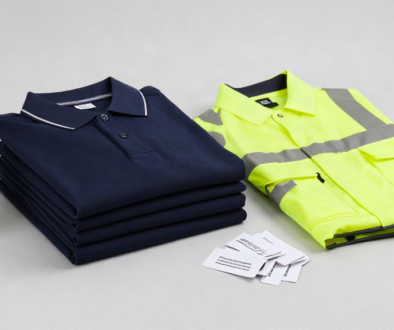
Hi-vis and PPE: embroidery on the main garments for durability, though printing can work on hi-vis if the design is detailed – just check it meets the visibility standards your site requires.
-
Chefwear, aprons and beauty and healthcare uniforms: both work well. Embroidery suits a clean single-colour mark; printing suits full-colour or detailed branding.
How to choose: a simple checklist
Run your logo through these questions:
-
Is it simple (text, initials, one or two colours)? Embroidery.
-
Is it detailed, multi-coloured or photographic? Printing.
-
Is it a polo, fleece, jacket or cap? Embroidery.
-
Is it a t-shirt or lightweight top? Printing.
-
Will it be washed hard or worn on site every day? Embroidery.
-
Do you need a big full-colour back graphic at a lower cost? Printing.
If you’re still not sure, the honest answer is: ask. A good supplier will look at your artwork and tell you which finish will do it justice – and a great one won’t charge you for the advice.
Why Salutem Workwear does both
We offer embroidery and printing because there’s no single right answer for every business. One team wants a discreet embroidered logo on their polos; another wants a bold printed design across the back of forty t-shirts. Both are proper jobs, done properly.
What doesn’t change is how we work: no minimum order, no setup fees, fast turnaround, and a real person on the other end who’ll help you get the finish right. Whether you’re branding two shirts for a small local business or kitting out a whole site, you get the same straight-talking service.
The bottom line
Embroidery wins on durability and that premium, stitched look – perfect for the garments your team wears most. Printing wins on detail, colour and cost for bigger or more complex designs. Most businesses end up using both, depending on the garment.
Still weighing it up? Send us your logo and tell us what the garments are for. We’ll point you at the right finish and get your order moving – no minimums, no setup fees, no fuss.