Types of Hi Vis Clothing: A Quick Guide to the Essentials
If you work on a site, in a yard, on the road or in a warehouse, hi vis clothing is the difference between being seen and being missed. But walk into any workwear catalogue and you’ll hit a wall of options: vests, polos, jumpers, softshells, coats, trousers, coveralls. So we’ve pulled the main types of hi vis clothing into one plain-English guide, so you can work out what your team actually needs before you buy.
Why the right hi vis clothing matters
Hi vis isn’t just a box to tick. It’s a legal requirement on many sites and a genuine safety measure in low light, poor weather and busy traffic. Get it right and your team stays visible, comfortable and compliant. Get it wrong and you’re either overheating in the summer, freezing in the winter, or replacing kit that wears out in weeks. The key is matching the garment to the season, the job and the environment.
The main types of hi vis clothing
Most hi vis kit falls into a handful of clear categories. Here’s the quick tour.
Hi vis vests and polos for warm-weather visibility
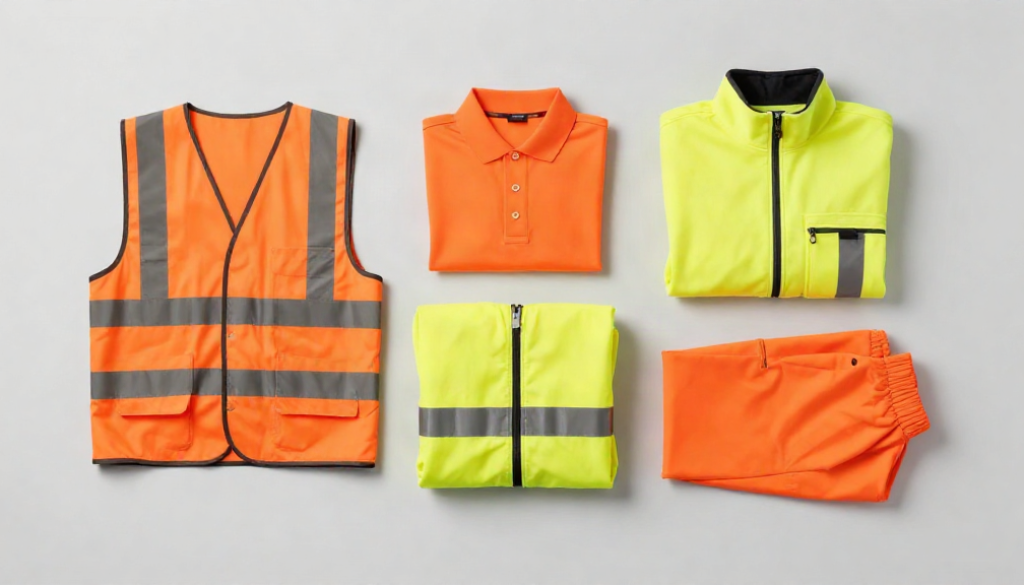
The classic hi vis vest is the lightest, cheapest and most common option. It slips on over your normal clothes and delivers instant visibility with almost no added warmth, which makes it ideal for summer, indoor work or quick jobs where you only need it now and then. Hi vis polo shirts step things up: they look smarter, breathe well and can be worn as your main layer rather than over the top of everything. For warm-weather outdoor teams, polos and t-shirts are often the everyday go-to.
Hi vis t-shirts and jumpers for everyday layers
Hi vis t-shirts are the comfortable middle ground, perfect for mild days and active work where you want visibility without bulk. When the temperature drops, hi vis jumpers and sweatshirts take over. They add warmth while keeping the reflective detailing and bright colour that keep you seen. These are the workhorses of a lot of British sites, because our weather rarely plays by the rules.
Hi vis softshells and fleeces for colder conditions
When it turns properly cold and wet, fleeces and softshells earn their keep. A hi vis fleece gives you warmth and breathability, while a hi vis softshell adds wind and shower resistance on top. Both keep the reflective bands and high-visibility fabric doing their job. They’re the layer you reach for on a frosty morning or a windy afternoon, and they layer neatly under a coat when it really bites.
Hi vis coats for wind and rain
For winter, wet weather or night shifts outdoors, a hi vis coat is the serious option. Look for waterproof and windproof fabrics, taped seams and a decent hood. A good hi vis coat keeps your crew dry and visible through the worst of the British weather, and it’s far cheaper than losing days to cold, soaked staff.
Hi vis trousers, joggers and shorts for full coverage
Visibility isn’t just about your top half. Hi vis trousers and hi vis joggers keep the legs seen and protected, which matters on sites with vehicles moving around. They’re tough, comfortable and often loaded with knee-pad pockets and plenty of storage. In the warmer months, hi vis shorts offer the same idea in a cooler cut. Add a hi vis tool vest or bodywarmer and you’ve got flexibility through the year.
Hi vis coveralls and bib and brace for all-over protection
Coveralls are the all-in-one solution: full-body visibility and protection in a single garment, ideal for dirty, oily or hazardous work where you need everything covered. Hi vis bib and brace overalls are the two-piece alternative, giving you the same leg coverage with the freedom to wear your own jacket on top. Both are staples for trades that get hands-on.
Hi vis bodywarmers and gilets for flexible layering
Bodywarmers and gilets are the layering Swiss Army knife. They keep your core warm while leaving your arms free to move, which makes them a favourite for anyone who needs dexterity and visibility at the same time. Wear one over a polo in spring, under a coat in winter, and you’ve got a garment that earns its place all year.
How to choose the right hi vis for the job
Start with the season and the environment. If it’s warm and you only need light coverage, vests, polos and t-shirts do the job. If it’s cold and wet, you’ll want fleeces, softshells and coats as your base layers. If the job is messy or hazardous, coveralls and bib and brace protect you head to toe. Factor in how much movement you need too: gilets and bodywarmers suit active roles, while full coveralls suit work where protection matters more than freedom.
Don’t forget the standard
Whatever you choose, make sure it’s actually fit for purpose. Most professional hi vis clothing in the UK meets the EN ISO 20471 standard, which grades garments on how much fluorescent and reflective material they carry. The higher the class, the more visible the garment. For road and rail work especially, check the requirements your site or client insists on before ordering.
Brand your hi vis and make it your own
Good hi vis does a second job: it promotes your business. Add your logo through embroidery or printing and every jacket, polo and vest becomes a walking advert for your company. It also helps you spot your own team on a crowded site in seconds. At Salutem Workwear we offer embroidery and printing with no setup fees, so branding your kit doesn’t come with a nasty surprise on the invoice.
The bottom line on types of hi vis clothing
There’s no single ‘best’ type of hi vis clothing, just the right type for the season, the job and the person wearing it. Vests and polos for the heat, jumpers and softshells for the cold, coats for the rain, trousers and coveralls for full protection, and gilets for layering in between. Build your team’s kit around those categories and you’ll stay visible, comfortable and safe all year round.
Need help picking the right hi vis for your team? Salutem Workwear supplies branded workwear and PPE across the UK with no minimum order and no setup fees. Get in touch and we’ll help you sort the right kit, fast.